Pipeline Girth Welding Solutions

Faster, more consistent circumferential welds for cross-country and in-plant pipe

Pipeline girth welding is one of the most demanding applications in welding. Every joint that connects two sections of pipe has to withstand internal pressure, ground movement, temperature swings, and decades of service, often in remote locations where rework is expensive and shutdowns are even more expensive. The quality of those circumferential welds determines the integrity of the entire line.

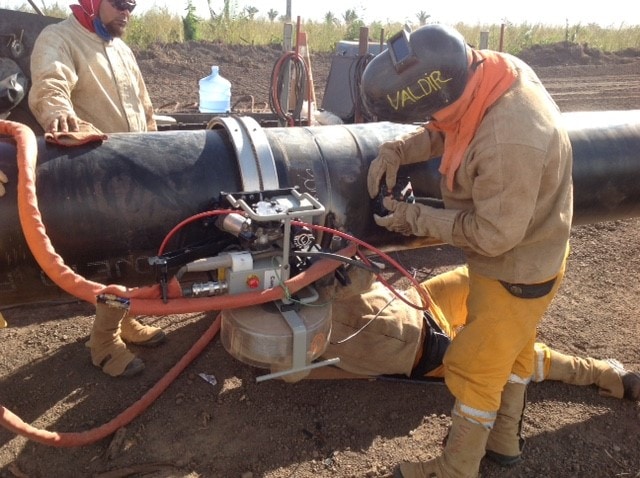
Mechanized pipeline girth welding replaces manual stick or semi-automatic work with a powered carriage that travels around the pipe on a guide track, carrying the welding torch through each pass at a controlled speed. The result is faster joint completion, more consistent weld geometry, and far less variability between welders and shifts.

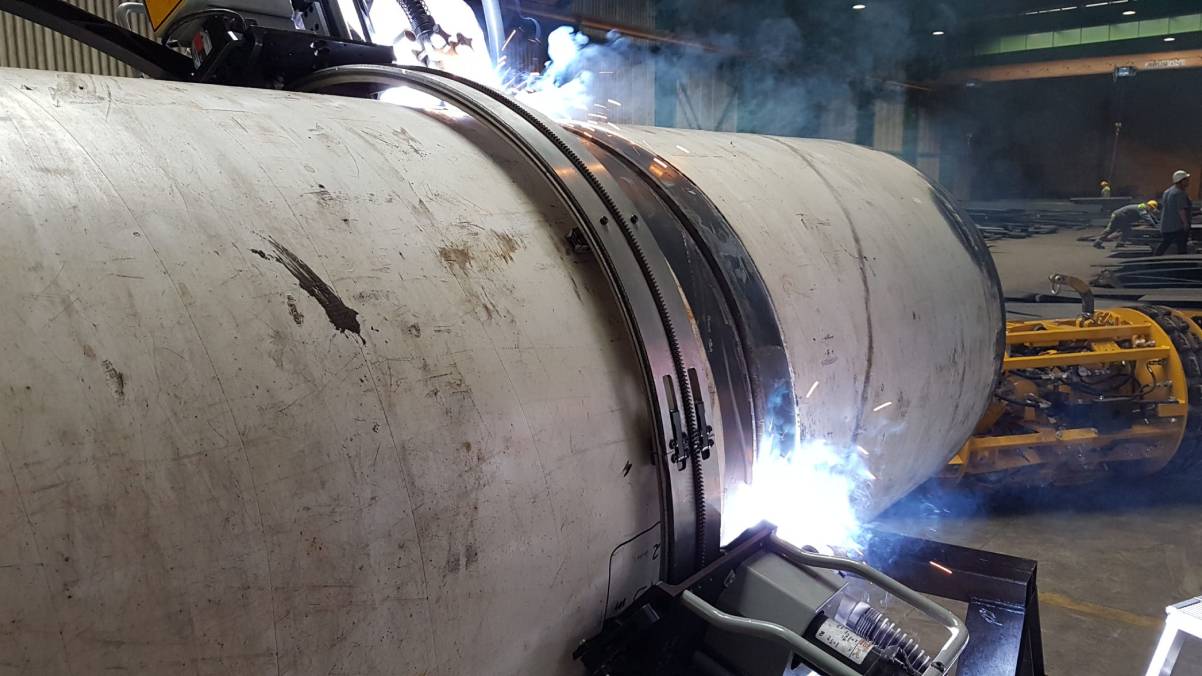
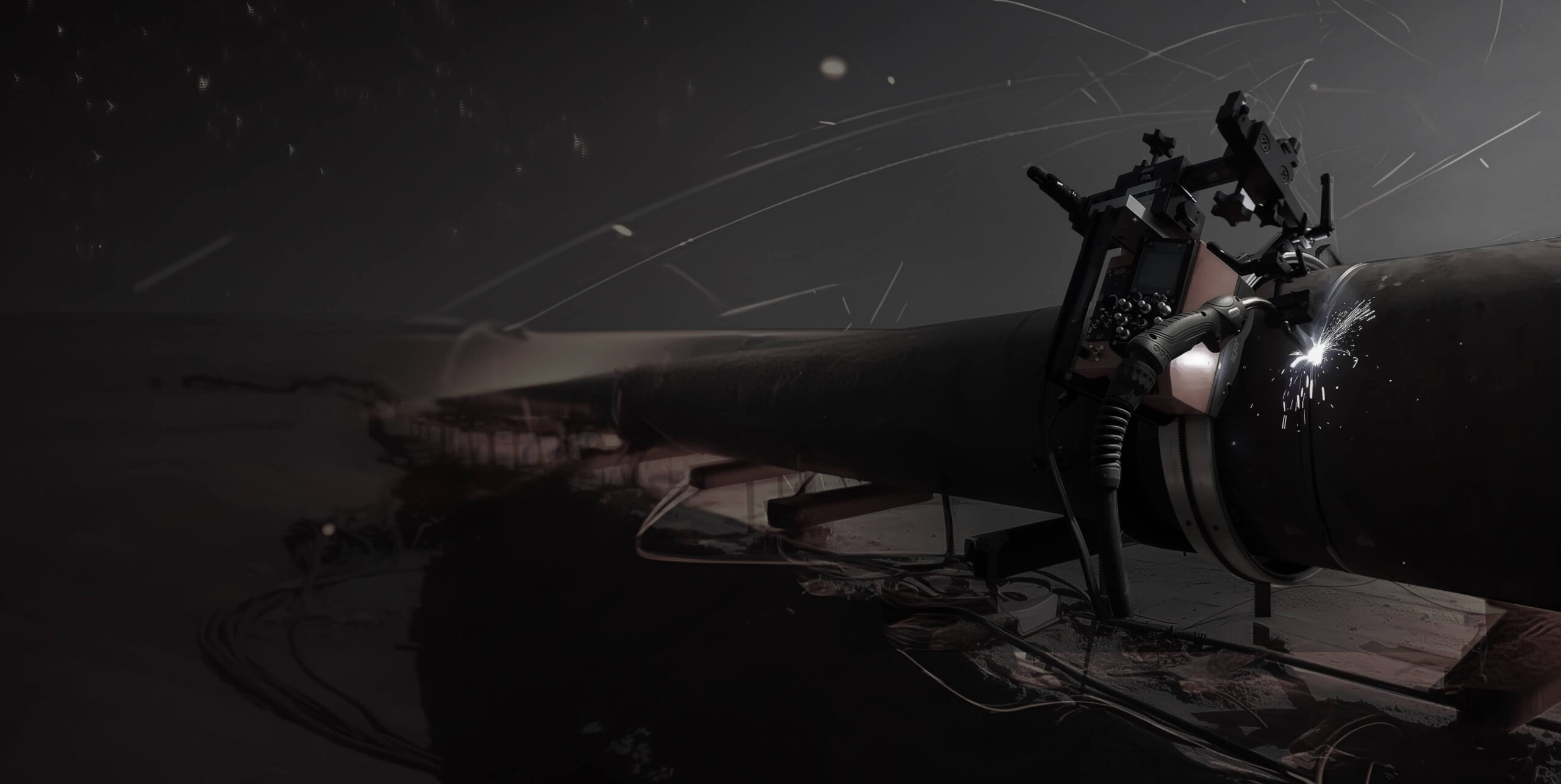
Gullco’s KAT® carriage system is purpose-built for this application.With its remote controlled slides for fine torch adjustments and its course adjustment racking, the carriage and torch can be positioned to the joint quickly.

Our Team is Ready to Discuss Your Pipeline Girth Welding Application
What is pipeline girth welding?

A girth weld is the circumferential weld that joins two sections of pipe end-to-end. On a long pipeline, every joint between two lengths of pipe is a girth weld, and a single project can require thousands of them. Tie-ins, repair sleeves, and fitting connections add to the count.

Because the torch has to travel a full 360° around the joint, often in fixed positions where the pipe cannot be rotated, girth welding is more difficult than rolled pipe welding in a shop. The welder has to handle flat, vertical, overhead, and uphill or downhill positions in a single pass.

Common applications include:

  • Cross-country oil and gas transmission lines
  • Midstream gathering systems
  • Natural gas distribution networks
  • Water and wastewater transmission mains
  • Slurry and process pipelines
  • Power plant and refinery piping

WHY MECHANIZE?

Manual pipeline girth welding is skilled work, and good pipeline welders are increasingly hard to find. Mechanizing the process addresses several problems at once:

Speed. A mechanized carriage maintains a steady, optimal travel speed without the start-stops of manual technique. Deposition rates are higher, and joint completion times drop significantly, often by 3x or more compared to stick welding, depending on wall thickness and process.

Consistency. The torch follows the same path at the same speed every time. Bead geometry, penetration, and heat input stay within a predictable window from joint to joint, shift to shift, and welder to welder.

Quality. Steadier travel speed and oscillation produce fewer defects. Less repair work means less downtime and lower per-joint cost over the life of a project.

Operator fatigue and safety. The welder controls the carriage from a comfortable position rather than working in the awkward postures girth welds typically demand. Less fatigue means better focus and fewer mistakes late in a shift.

Easier training curve. Operators do not need decades of experience to produce sound welds with mechanized equipment. The system handles travel speed, oscillation, and torch positioning, the operator manages the parameters.

The Benefits of Mechanized Welding: A Broader look at mechanization advantages across applications.

Gullco’s approach: the KAT® system

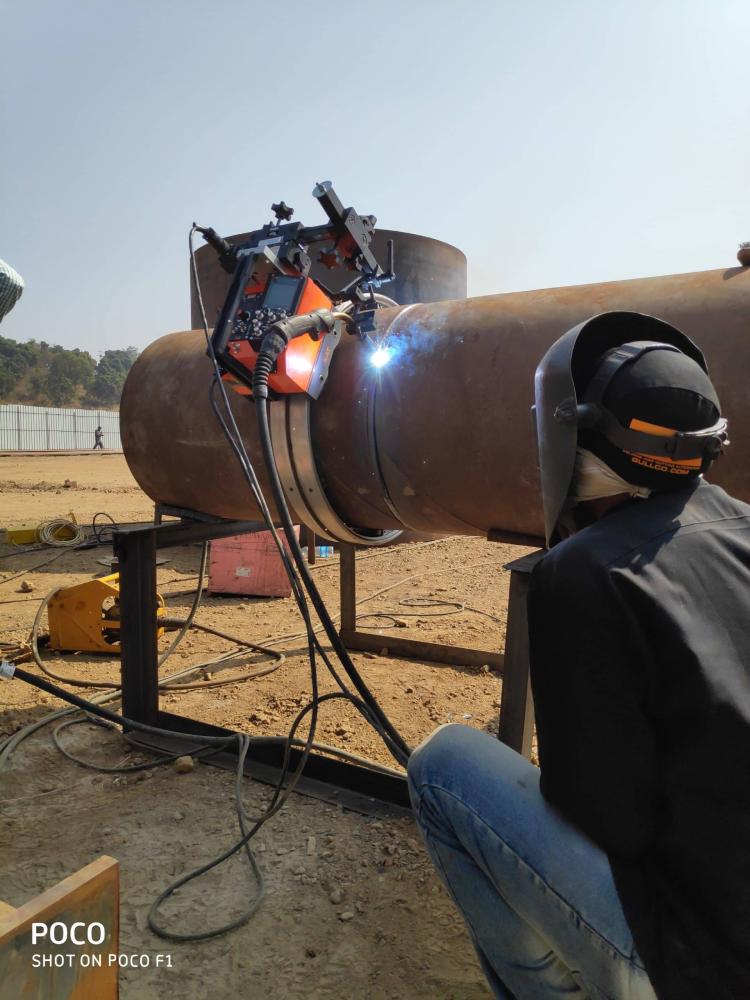
The KAT® is a mechanized rack and pinion drive tractor-style carriage that rides on a formed rigid track ring clamped around the outside diameter of the pipe. The track holds the carriage at a fixed standoff from the pipe surface, and the carriage drives itself around the joint at a programmed travel speed while the operator adjusts the torch remotely to track the weld groove.

Key capabilities:

  • Linear and radial oscillation. Width and frequency are programmable, allowing the bead to be tailored to wall thickness and joint geometry.
  • Motorized width adjustment (2-6 inch. Stroke slides available) Width can be changed during the weld without stopping.
  • High deposition rate. Designed to push hot processes (FCAW, GMAW) at the rates pipeline production demands.
  • Pipe diameter range: Custom formed rings of 10” and above.

The KAT® runs on the same motion-control platform used in Gullco’s broader track welding line, so operators familiar with KAT® carriages on plate or structural work will recognize the controls.

Welding processes

Pipeline girth welds are typically built up over several passes, often combining processes — for example, a GTAW root pass followed by GMAW or FCAW fill and cap passes. The Pipe KAT is built for the production side of that sequence: the high-deposition fill and cap work where mechanization delivers the biggest gains in speed and consistency.

  • GMAW (MIG) solid or metal-cored wire for fill and cap; high deposition with good control
  • FCAW flux-cored for fast fills, especially on heavier wall pipe

The KAT® pairs with all industry standard power sources. Process selection depends on pipe material, wall thickness, and project requirements, confirm specifics with a Gullco automation specialist.

Where the KAT® fits in oil and gas pipeline construction

The system has been deployed on midstream and transmission projects where long runs of large-diameter pipe demand consistent, repeatable girth welds. See Oil & Gas Welding Automation for project examples and broader industry applications.

In addition to new construction, mechanized girth welding is increasingly used for:

  • Pipeline integrity repairs and tie-ins
  • Pump station and compressor station piping
  • LNG and storage terminal piping
  • Refinery and petrochemical process piping
  • Power generation piping in conventional, nuclear, and renewable plants

Compared to other automation approaches

Mechanized pipeline welding equipment generally falls into a few categories. The KAT® is a rigid-track bug-and-band system, which differs from:

  • Enclosed orbital heads  fully enclosed weld heads designed primarily for thin-wall, small-diameter, high-purity TIG work (food, pharma, semiconductor). Not well suited to heavy-wall pipeline production.
  • Flexible-track carriages suited to small-diameter or tight-radius work; less stable on long-running production welds.

The rigid-track approach gives the KAT® the rigidity needed for heavy production work on large-diameter pipe while keeping the system portable enough for field deployment. For applications with curved surfaces or smaller diameters, the KAT®200 for flexible track may be a better fit.

Learn More

Contact Gullco International for Help Today

To discuss a specific pipeline project or determine whether the KAT® is the right fit for your pipe diameter, wall thickness, and process requirements, contact a Gullco welding automation specialist.

Ready to get started?

With over seven decades of experience and a worldwide reach, we synthesize the skills, knowledge, and experience to offer reliable, innovative solutions to automate welding and associated processes. We are committed to continual improvement, developing new welding automation systems and equipment to address the ever-changing needs of the industry.

# # # # # # # #